

Don't confuse morality and law
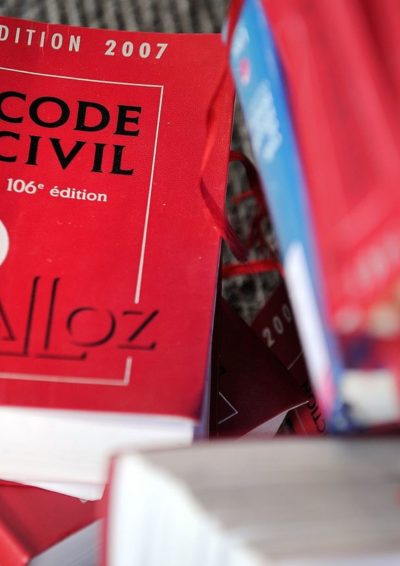

A modification of the Civil Code would undoubtedly be necessary to implement the measure put forward by Nicolas Hulot. afp.com/JEAN-SEBASTIEN EVRARD
Nicolas Hulot wants to oblige companies to include respect for the environment and "the men and women who work there" in their corporate purpose. The Minister indicated that this would probably require amending the French Civil Code. This idea will undoubtedly meet with the approval of a majority of French people. It is nonetheless economically harmful, legally dangerous and philosophically unfounded. And its effectiveness in protecting the environment has not even been demonstrated.
Today, the French Civil Code stipulates that every company must have a lawful object, and that the law must define what is lawful and what is not. In this case, the law is supposed to prohibit practices that are harmful to nature. Similarly, harassment of employees is already severely punished, and rightly so. The "economic order" is thus subject to a "legal order" which, in France, is itself determined by Parliament, i.e. by the "political order". There is nothing to prevent parliamentarians from strengthening the legal arsenal to make environmental law more binding. On the other hand, directly obliging companies to make environmental protection part of their corporate purpose turns them into instruments of government policy, which poses three problems. Firstly, it contradicts the freedom of enterprise championed by the President of the Republic, and already reflected in reforms such as that of the labor market. Secondly, it opens an interventionist and legal Pandora's box. What's to stop a government in the future from including in the corporate purpose of a company causes as legitimate as environmental protection, the fight against poverty or illiteracy, but also less legitimate ones? How will judges assess the notion of fault on the part of company directors? Thirdly, this confusion of orders is what Pascal called "ridiculous". We've given up on subjecting companies to the law. Instead, we prefer to "moralize" them, with this morality being defined by the government. This confusion of orders does not correspond to the operating principle of a liberal democracy.
Nicolas Hulot's proposal also overlooks the crux of the matter: the fact that France's ecological policy is still incomplete. Environmental taxes account for just over 2% of our GDP. The European Union average is close to 2.5%, and Denmark is over 4%. Worse still, in France, despite its position as champion of compulsory taxation in the developed world, the proportion of environmental taxes is lower today than it was at the end of the 1990s! So it's hard to understand why the government has opted for a baroque system rather than measures whose effectiveness has been proven by all the countries that have adopted them.
France is well placed to be wary of such measures, which may look good on paper, but have cascading effects. In 2005, Jacques Chirac had the precautionary principle enshrined in the French Constitution. Today, there aren't many people who think this was a good thing for anyone (including the environment). The precautionary principle has become a brake on innovation, protecting the past but not the future. But we have to live with it: no president will ever take the initiative of convening Congress to remove it from the Constitution. It's politically unthinkable. Right-thinking measures have a strong ratchet effect, regardless of their impact, however harmful. That's why we need to think carefully before setting them in stone.
Article published in L'Express, December 27, 2017
Sur le même thème
Paris Olympics: No significant macro-economic impact expected
 Voir l’article
Taiwan: Economic success threatened by demographics and geopolitics
Voir l’article
Les enseignants Français : Pas nécessairement « sous-payés » par rapport à ceux de l’OCDE
Voir l’article
Speed limits on roads and freeways: savings of €149 per household
Voir l’article